|
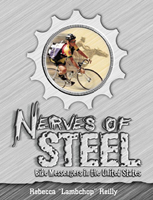
Bike messengers roll with changes
|
| Six San Diego companies still doing business in Internet age San Diego Union-Tribune, February 16, 2006 By Frank Green In a world where documents can be e-mailed with the flick of a finger, there's still room on the information highway for Kenton Hoppas and his small band of pedal pushers. Aloha Bicycle Services, the company Hoppas founded six years ago, is one of about a half-dozen in downtown San Diego that still deliver legal papers, blueprints and other business-related forms the old-school way – on the backs of speedy two-wheelers. The Internet, with its attachments and Web links, has run bicycle couriers off the pavement in many U.S. cities, but bicyclists have held their own in San Diego. Of a dozen messenger services surveyed in 1991 by The San Diego Union-Tribune, six used pedal power – the same number as today. Robert Porambo, president of Knox Services on Fourth Avenue, employs three full-time riders, the most since the document-management company was founded more than 30 years ago. He said his 10-speed crew members earn about $25,000 each, as well as the side benefits of sun and exercise. “While electronic filing has become more prevalent, there's still a big need to get papers delivered in a fast and efficient way,” Porambo said. Many court and legal documents must be filed or delivered in paper form. The number of practicing attorneys in the county has more than tripled since the early 1970s to about 13,000, many of whom work in the downtown business district near the courthouses and in the thick of traffic congestion. Probably the biggest bike-messenger employer is Cal Express on Kettner Boulevard, a legal-support business that has maintained a staff of 20 full-time pedalers for years. About 30 percent of the company's deliveries are made via bike, with the rest carried by cars and trucks, company spokesman Ronny Webb said. “Our whole business has been growing,” he said. The appeal of bike messengers has to do with the quaint charm of the old-fashioned service, as well as its practicality during rush hour. A bike can typically outpace a car on a 10-block ride on Fifth Avenue during afternoon drive time. Delivery fees, which range anywhere between $5 and $20 depending on the time and destination, are comparable to those charged by car messengers. “Timing is very, very important to us,” said Gloria Daviston, a spokeswoman for Hope Engineering, which calls on bike messengers several times a day to ferry papers to and from its Third Avenue offices. “Somebody in a car has to find a parking place and may get into a traffic jam,” she said. “The bike messenger doesn't have those problems and can get from one place to the next very quickly.” While some bicycle couriers have maintained their business, the field is tougher than it used to be. In New York City, for example, Breakaway Courier on West 35th Street had 100 or so bike messengers weaving in and out of traffic just five years ago but now maintains a group of 40 riders. “There is a slow erosion in the business because of the growth of digital documents. . . . It's like a python squeezing its prey,” Breakaway President Robert Kotch said. But Aloha Bicycle, which earned about $60,000 in revenue last year, has experienced steady growth since its inception. Owner Hoppas and his wife, Mimi, make most of the deliveries on Italian-made Basso road bikes, with large canvas document bags draped over their shoulders. When the workload is heavy or they need to take a day off, the couple call on several part-time bike messengers to fill in. Hoppas, who takes orders from the company's 60 or so regular clients by cell phone, said he decided to open the business while waiting tables six years ago. “My goal was to have a company that would pay the overhead, the rent, and would grow,” he said. The work consists largely of delivering plans and blueprints to and from builders, architects and engineers, as well as court filings. Hoppas said managers at construction sites still need paperwork in hand, and that some court documents have yet to be digitized. Hoppas has made special trips for clients over the years to pay a parking ticket, return clothes from the dry cleaners, take shoes to the cobbler and make bank deposits. “I recently delivered two breast pumps,” he said. Hoppas said his longest assignment at the handlebars was a 10-mile-plus trip to Serra Mesa to deliver documents. The typical downtown delivery costs $7. But the company also bikes as far north as Hillcrest, east to Golden Hill and south to Imperial Avenue, for about $16 a trip. Only occasionally do things in the bike lane get dangerous. Hoppas recently scraped his elbow when he hit a pothole and went sprawling onto the pavement. When someone opened a car door in front of his bike three years ago, he vaulted over the top, landing unhurt on his feet and back. “The highest level of danger comes from drivers who are visiting downtown for the first time,” Hoppas said. “They'll stop the car and look around. We see a lot of people turn down one-way streets and come right at us.” |
